🧬 Know When to Refer: A Genetic Counselor's Guide for Clinicians
You don't need to be a genetics expert to recognize when a patient needs one. Here's a practical framework to help you identify hereditary cancer risk in your practice. Genetic Counselors who specialize in oncology can gather a detailed family history and discuss the benefits and limitations of genetic testing. The following information is sourced from the National Comprehensive Cancer Network.
👤 Personal History
Some diagnoses can indicate a referral on their own:
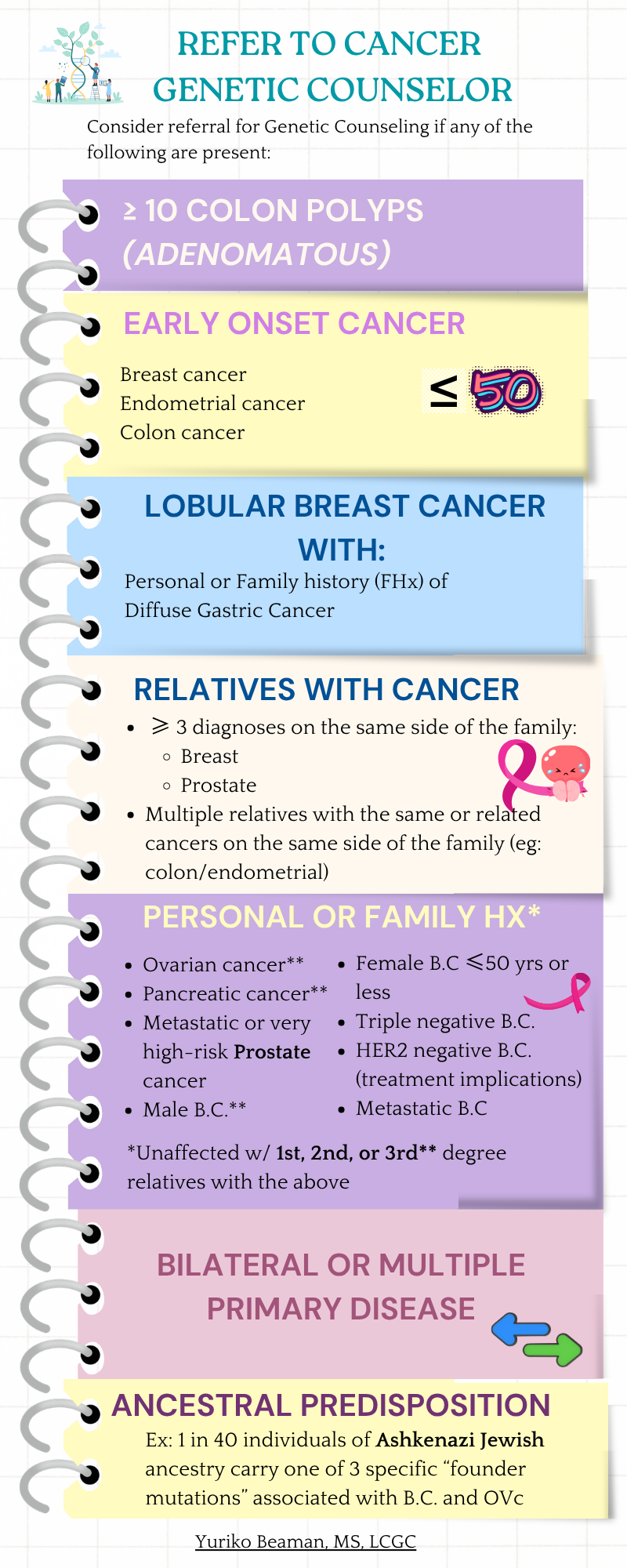
Breast cancer ≤50, triple-negative breast cancer, male breast cancer, or metastatic breast cancer
Endometrial or colon cancer ≤50
Ovarian, pancreatic, or metastatic/very high-risk prostate cancer
Bilateral or multiple primary cancers
≥10 adenomatous colon polyps
HER2-negative breast cancer (has treatment implications — adjuvant olaparib eligibility)
Lobular breast cancer AND personal or family history of diffuse gastric cancer
👨👩👧 Family History
Patterns across generations matter. Genetic counselors are trained to gather a family history in a pedigree and interpret a patient’s risk for an inherited cancer syndrome. Even if your patient is unaffected, their family history can meet NCCN guidelines for genetic testing:
≥3 relatives on the same side of the family with breast or prostate cancer
Multiple relatives with related cancers on the same side (e.g., colon + endometrial — could be indicators for Lynch Syndrome - https://geneticcounselor.org/blog/lynch-syndrome)
Any close relative with ovarian, pancreatic, male breast, metastatic breast, or metastatic/very high-risk prostate cancer
Ashkenazi Jewish ancestry — 1 in 40 individuals carry one of 3 BRCA founder mutations
🔬 Tumor & Clinical Features
Sometimes the pathology itself is the signal:
MMR deficiency/MSI-H on tumor testing at any age
A pathogenic variant identified on somatic/tumor genomic testing that may have germline implications
Hereditary cancer risk assessment protects not just your patient, but their entire family. If hereditary cancer comes to mind, refer to a genetic counselor. That's what we're here for!